In November 2020 I was seventeen, in a public high school in Wuhan, with an iPad on my desk and a browser tab open to “Election Results Live” on USA Today. Our civics teacher, who taught the national politics curriculum, had bet us lunch money that Trump would win the American election. We had bet him Biden. I refreshed the page anxiously between questions. The early returns went Trump’s way and he was already smiling. Over the days that followed, the mail-in ballots came in. By the time the call went to Biden, he was handing over the envelope.
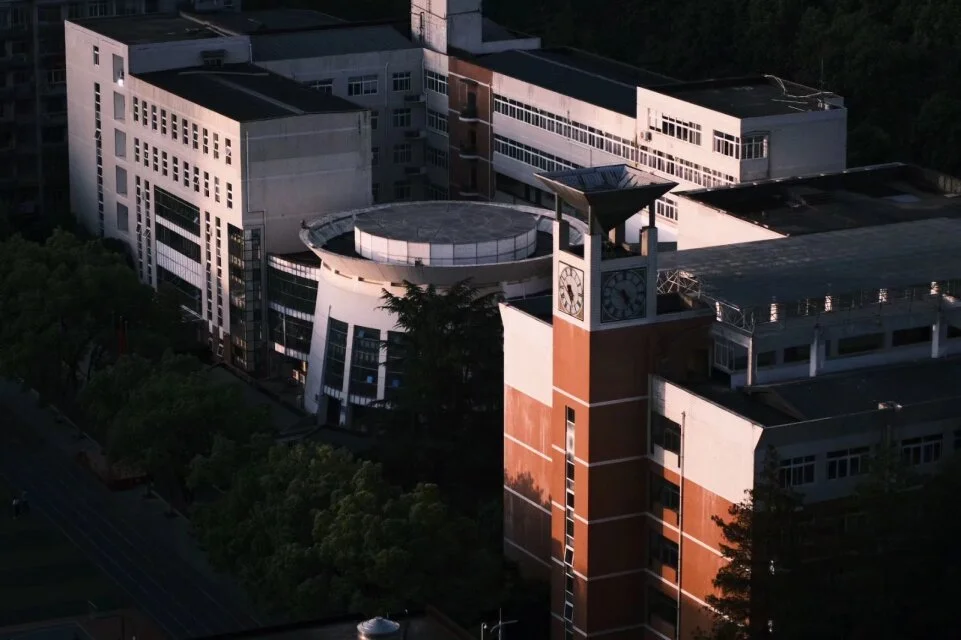
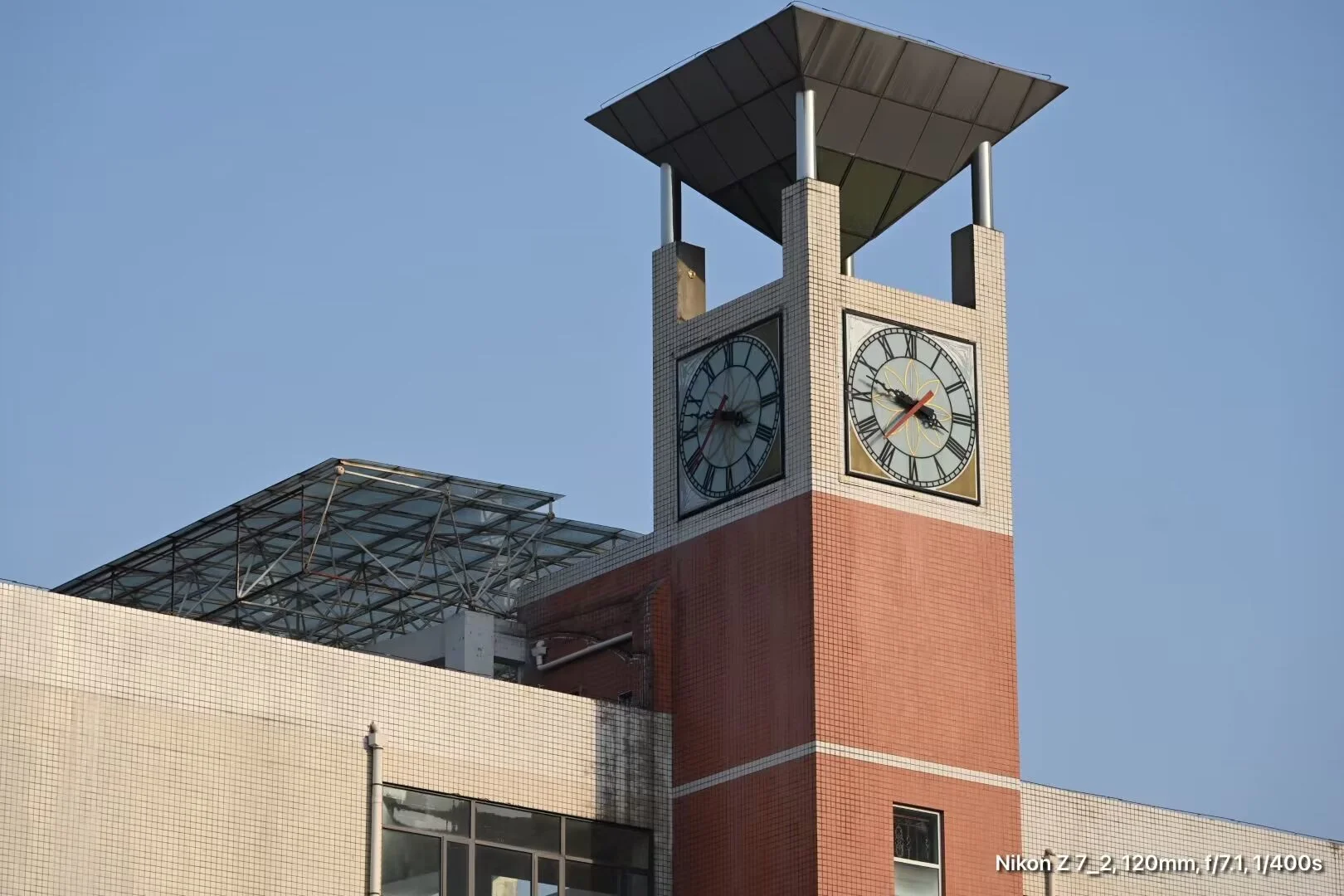
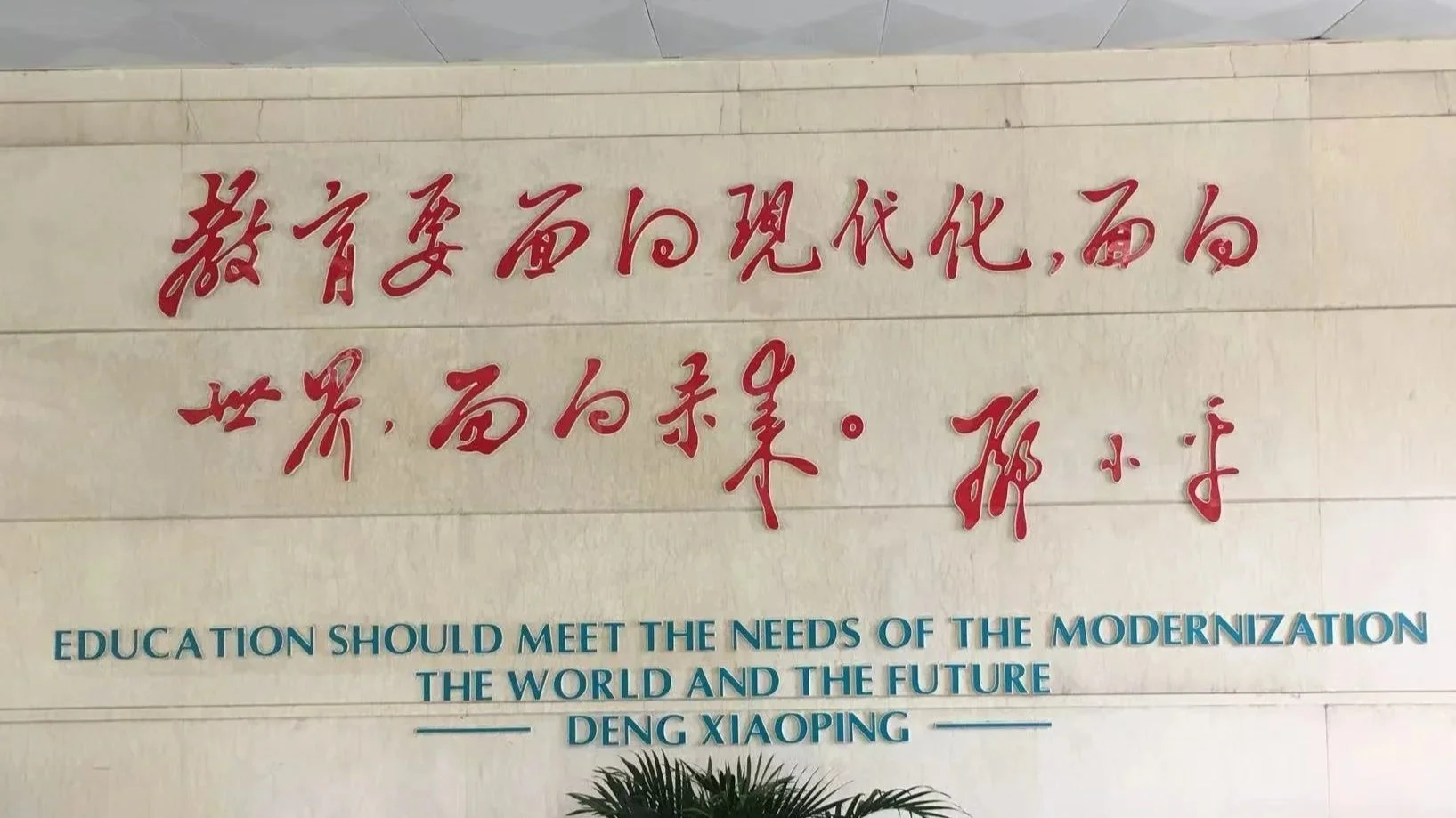
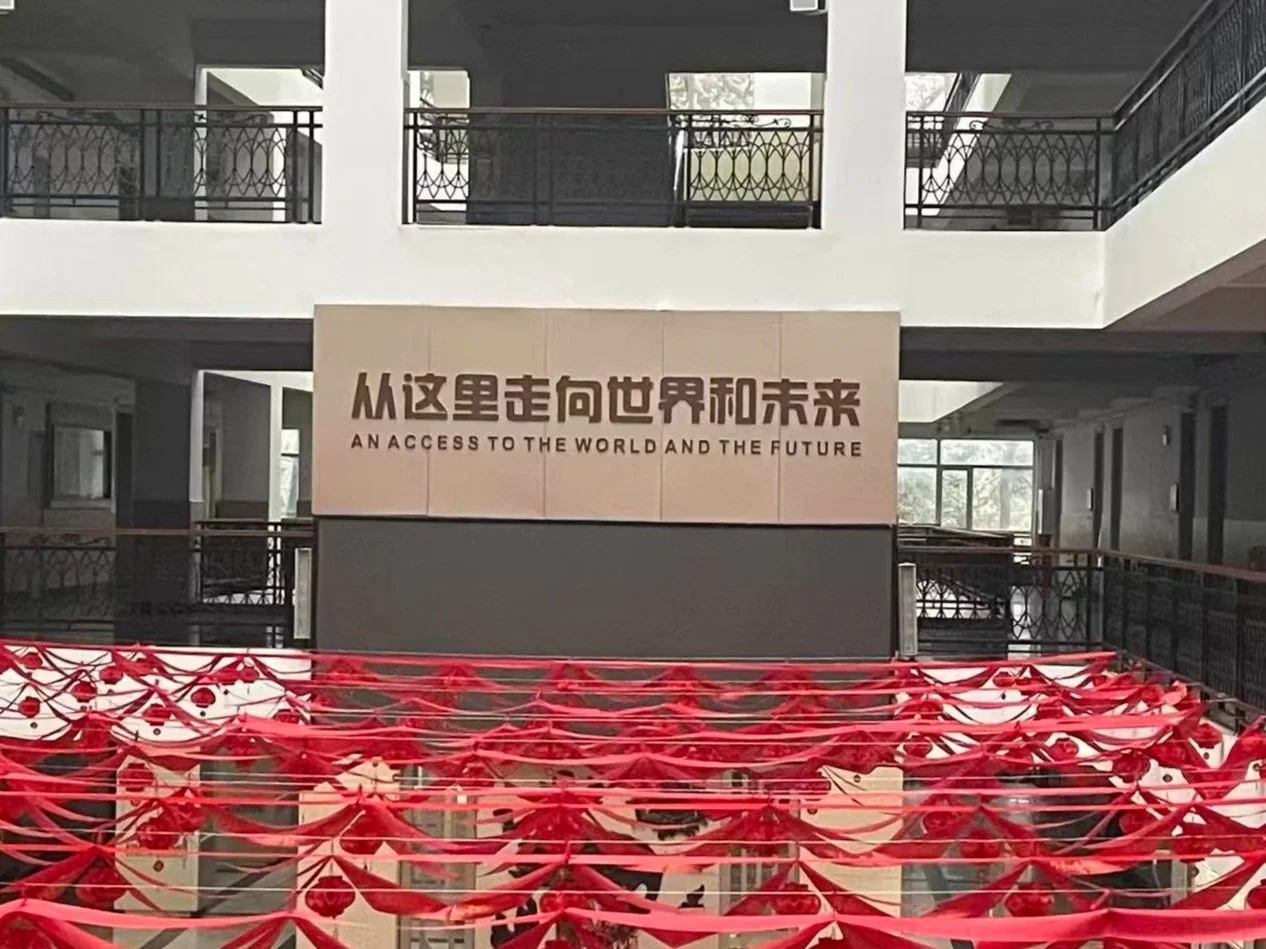
The school was Wuhan Foreign Languages School, and I had been there for a little over two years. Wuhan is divided by two rivers, and before I was fifteen, I had crossed them maybe five times; I grew up in the southern suburbs, and my world had not reached too far beyond the thirty-minute radius of my home. WFLS sat in the middle of downtown Hankou, on the other side of the river, next to two of the city’s best hospitals and an upscale mall. The campus was small, one of the smallest among the elite public schools. On the walls, in English and French and German and Spanish, were quotes from writers I mostly could not read yet.
The school was founded in 1964 by the Ministry of Foreign Affairs to train future diplomats. The pipeline has broadened over the decades: most of my classmates went on to ordinary Chinese universities, not the foreign service. But the institutional DNA is there. WFLS is one of sixteen schools in China authorized to send students directly into university language programs without sitting for the Gaokao, the national college entrance exam. Roughly half of my class took that route; the other half sat for the exam like everyone else. The environment I’m about to describe was afforded by this one structural fact: the school could be what it was because half its students did not need the exam, and the pressure that ran most other Chinese high schools ran here only half as hard. In the city, WFLS had a reputation for being too “loose” and “liberal”. Parents believed that serious results required strict management and long study hours. They were not wrong about most Chinese public schools. Ours was the exception.
In the classroom we had a ritual called “class duty”: every morning, a student would give a presentation on a topic of their own choosing. The faculty did not vet the topics. The ones I still remember were on same-sex marriage, the Taiwan elections, Greta Thunberg and the leftward turn in European politics, and assisted suicide. A classmate talked about Nietzsche and the pessimistic tradition in German philosophy; he was sixteen. I went on about the proposed lowering of the minimum age of criminal liability in China. The English version of the ritual ran in our smaller English classes, twenty-five students to a room, using an imported textbook by the Oxford Press called Solutions that skipped the national curriculum entirely and moved through topics including Irish independence, AI, and the ethics of the global food supply.
Once a year the freshman class held an English speech contest. Each of us was assigned a famous speech to imitate, then asked to perform it in front of the school. The choices the year I competed included Martin Luther King’s “I Have a Dream,” the Gettysburg Address, and Hillary Clinton’s 2008 concession speech to Obama. The second part of the contest was an improvised reading: we drew a clip at random from a set of political speeches and performed it cold. The faculty had chosen the clips. Even then I understood that someone had been thoughtful about this. Someone had decided a group of Chinese teenagers in a public high school ought to stand up and sound, for two minutes, like Hillary Clinton or Boris Johnson. That was a decision.
We were also teenagers. In our first year a sparrow fell onto the classroom balcony and a few of us caught it. We built it an enclosure out of a cardboard box and some cloth and tried to keep it warm. It died the same morning. A friend and I asked to be excused from geography class and buried it in the corner of the schoolyard. I still think about it sometimes, the smallness of the body in my friend’s hands, the seriousness with which we dug. The school had a broadcasting station, and students could bring in music and play it across the campus at dinner, and I remember walking the track at dusk with a song I had requested moving through the loudspeakers above me, chatting with a friend under a purpling sky. Twice a year the students put on their own productions, plays, musicals, the whole apparatus, built from scratch with no adult direction. One year we staged Hamilton. Another year, Mozart, l’opéra rock, in French. And one year, Farewell My Concubine, with a storyline built directly on Cultural Revolution and all, performed in front of the whole school. I can hardly believe, now, that we had the resolve to do any of this at sixteen.
COVID began in our city at the end of first semester of second year. The second semester was fully online. My journals filled up with the world rather than with me: the world had become suddenly unfamiliar, and we needed some way to hold it. Our class group chat ran on argument: whether the consumer coupons the government distributed were stimulus or coerced spending; whether lockdown was proportionate; whether stereotypes were cognitive shortcut or harm; whether the universal healthcare coverage of sildenafil — licensed, officially, for hypertension, though better known as Viagra — meant anything, given that most of women’s reproductive healthcare was not on the list. I read the phrase Wuhan coronavirus on CNN and felt something I could not yet name. I was more interested, at the time, in naming it than in being only angry about it.
Most of us had VPNs by then. I had gotten mine the year before, for access to Wikipedia on research for the Model UN club. At that point I still wanted to be a diplomat, the only route I had heard of to the rest of the world. During lockdown the VPN got me onto YouTube, and that was how I taught myself American constitutional law: oral arguments, Oyez summaries, Quimbee case briefs, Frontline documentaries. I copied the opinions I loved into the back of a notebook I otherwise used for daily to-do lists. Because I had classmates who would argue with me about Plessy the same way they argued about the consumer coupons, the information never radicalized me in the way people normally imagined it would, but simply became part of the conversation.
The worldview the school gave us was, I can see now, a particular one. It was 2018 through 2021, three years in which the liberal international order we had been taught to believe in was cracking up visibly around us: a US–China trade war, Hong Kong in the streets for months at a time, a pandemic that began in our own city and spread outward, mass lockdowns, economic turbulence, a Chinese MeToo movement that rose and was quickly contained. Trump had been elected. Brexit had happened. But the air we breathed was still Obama-era: humanist and globalist, vaguely confident that the liberal international order existed and that history was bending somewhere. We believed the world was made of places that could speak to each other. We believed, mostly without saying so, that we would one day move through those places, as students, as professionals, as citizens of something larger than the country that had issued our passports. The U.S. elections, Greta Thunberg, the Taiwan education reform: we cared about these things because reading about them had made them ours. Someone standing in 2026 might call that naïve. I cannot entirely defend it. I also cannot pretend it did not shape me, and I am not sure I would want to. The habit of holding the world close, of treating what happened anywhere as a thing one could think about and argue about and move toward, is what I took with me when I left.
My handful of high school friends are scattered now: some went to PKU with me for undergrad and stayed there, some in the UK, some in Germany, a few here in the States. When we meet up, the conversation picks up wherever we left it at seventeen, still ranging across everything, still serious and slightly too certain, still arguing. I do not have this with most people. For a long time I thought that was because of who my friends happened to be. I now think it was also partly because of the school.
We did not ask where this had come from. None of us talked about family background; it was, among us, a non-subject. None of us thought of the school as a class filter, either. After all, admission was solely by exam score, the most legible kind of merit in China. But the filter sat upstream of the exam, in the English tutors, the summer camps overseas, the parents with time and money to care about a global education; in the willingness of families to gamble on a language major over a safer STEM track. Those of us already on its other side did not see it.
Once a year the graduating class put on a prom, a student-run show with no faculty support where the seniors picked the venue, the catering, the music, and raised the money themselves. I led mine. My team and I, all seventeen-year-olds, raised 100k in two months. At the time I thought of it as a remarkable feat. It was. But every sponsor, the florist, the catering company, the wedding venue, branches of city bank, two or three training centers, came through somebody’s parent, somebody’s uncle, somebody’s family friend, somebody’s teacher. We were rerouting money along channels already laid down for us.
I came to see it, in fragments, that we were not exceptional. We had a system, and the families, networks, and resources to back us up. Exam-based meritocracy moves no earlier than the exam; what comes before is left to the families. The school, in the end, was an ideal bubble wrap. I won’t pretend it wasn’t.
I was fifteen walking in and eighteen walking out. What I’ve described was a peculiar possibility inside the uniform imagination of what Chinese public school is supposed to be, one that required a system to sustain it, families to support it, and a generation of teachers who believed in what they were doing. But it was what I had. There was a sparrow. There was a song over the purpling sky. There was Mozart, l’opéra rock, in French. From the inside, it looked like the whole world. We did not yet know it had edges. It was, indeed, the age of innocence.
I still argue the way I argued then. I still walk into rooms believing there is a conversation to be had. The shape of me came from that place, and I would like to believe, still, that the shape of my education was pointing at something real — even if the thing it was pointing at is harder to find now than it was at seventeen.
At the Cathedral’s Foot
In June once, in the evening,
returning from a long trip,
with memories of France’s blooming trees
still fresh in our minds,
its yellow fields, green plane trees
sprinting before the car,
we sat on the curb at the cathedral's foot
and spoke softly about disasters,
about what lay ahead, the coming fear,
and someone said this was the best
we could do now—
to talk of darkness in that bright shadow.
by Adam Zagajewski
translated from the Polish by Clare Cavanagh
from his book “Eternal Enemies”
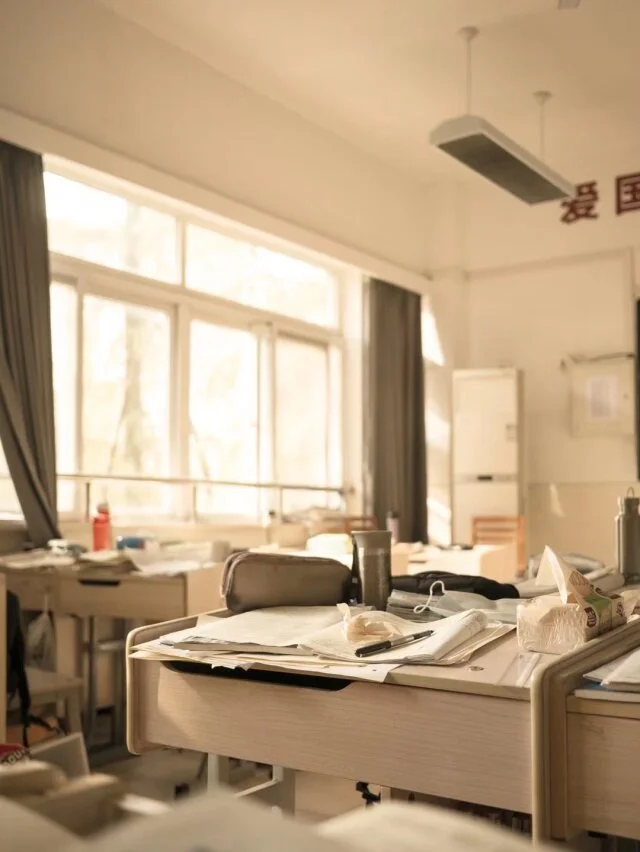
[Photo credits: Wuwaifengjingqiang]
